
 English
  中文简体
中文简体 
Woven Fusible Interlining & Double Dot Fusible Interlining: Technical Buying Guide
2026-04-03
Content
- 1 What Fusible Interlining Does and Why Substrate Construction Matters
- 2 Woven Fusible Interlining: Construction, Grades, and Performance Advantages
- 3 Double Dot Fusible Interlining: Coating Technology and What Sets It Apart
- 4 Resin Chemistry Options: Matching Adhesive Type to Application Requirements
- 5 Fusing Parameters: The Three Variables That Determine Bond Quality
- 6 Common Fusing Defects and How to Diagnose Them
- 7 Selecting Between Woven and Double Dot Fusible Interlining: A Decision Framework
- 8 Procurement Checklist for Buyers and Garment Technologists
What Fusible Interlining Does and Why Substrate Construction Matters
Fusible interlining is a textile substrate coated on one or both faces with a thermoplastic resin that bonds to a shell fabric under controlled combinations of heat, pressure, and time. Its function in garment and textile manufacturing is to add structural support, dimensional stability, and hand to the shell fabric layer — reinforcing collars, cuffs, plackets, waistbands, and jacket fronts without the weight or rigidity of traditional sew-in interfacing.
The substrate construction of the interlining — whether woven, non-woven, or knit — is the primary variable governing how the composite laminate behaves after bonding. Woven fusible interlining and non-woven fusible interlining are not interchangeable grades of the same product; they are fundamentally different materials that deliver different performance profiles in the finished garment. Selecting the substrate type correctly is the most consequential technical decision in interlining specification, preceding coating type, resin chemistry, and bonding parameter selection.
The global fusible interlining market was valued at approximately USD 3.2 billion in 2023, with woven grades commanding a premium over non-woven alternatives in tailoring, shirting, and formal wear segments where hand, drape, and dimensional stability under repeated laundering are paramount. Non-woven grades dominate volume in casual wear, fast fashion, and applications where cost efficiency outweighs performance requirements.
Woven Fusible Interlining: Construction, Grades, and Performance Advantages
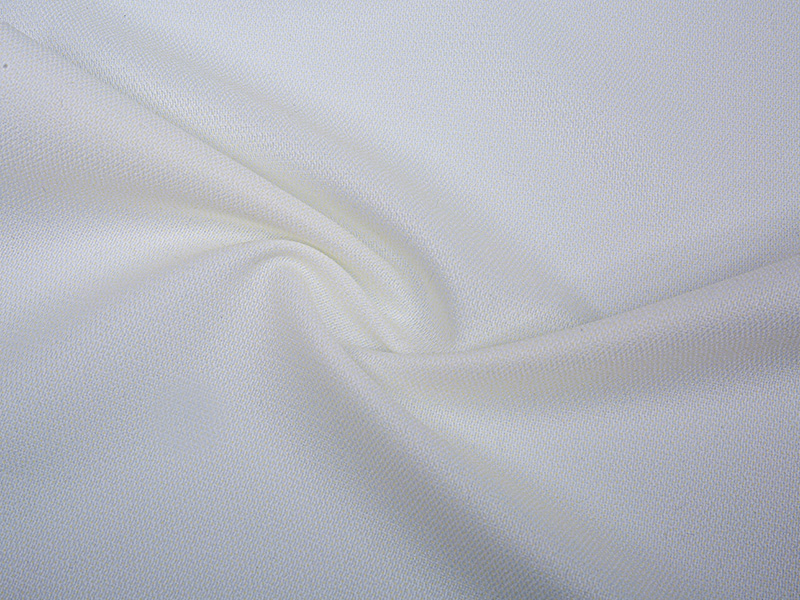
Woven fusible interlining is produced on conventional shuttle or shuttleless looms using yarns of cotton, polyester, viscose, or blended fibre compositions, then finished with a thermoplastic adhesive coating on one face. The woven structure — in which yarns interlace at defined angles — gives the substrate inherent properties that non-woven materials cannot replicate: controlled yarn crimp, predictable stretch and recovery in the bias direction, and a fabric hand that moves compatibly with woven shell fabrics rather than imposing a foreign character on the composite laminate.
Yarn Fibre Composition and Its Effect on Performance
The fibre content of the woven interlining substrate directly determines its laundering behaviour, thermal stability during fusing, and compatibility with the shell fabric's care requirements:
- 100% cotton: Cotton woven interlinings offer excellent breathability, natural hand compatible with cotton and linen shell fabrics, and good dimensional stability through repeated washing at 60°C and above. Cotton substrates absorb steam well during fusing, promoting even heat distribution through the adhesive layer. The primary limitation is susceptibility to shrinkage if pre-shrinking treatment is inadequate — a manufacturing defect that manifests as bubbling or delamination in the finished garment after the first wash.
- 100% polyester: Polyester woven interlinings provide superior dimensional stability across a wide range of washing temperatures, higher tensile strength than cotton equivalents at equivalent weight, and resistance to shrinkage. Polyester substrates are the dominant choice for formalwear and suiting applications where dry-clean-only care labels are standard and high-temperature pressing is routine. Low moisture absorption means steam penetration during fusing must be carefully managed to prevent uneven bonding.
- Polyester/cotton blends (typically 65/35 or 50/50): Blended yarns combine the dimensional stability of polyester with the absorbency and natural hand of cotton. Blend interlining substrates are widely used in shirting applications where machine wash at 40–60°C is required and a softer composite hand than pure polyester delivers is preferred.
- Viscose (rayon): Viscose woven interlinings are specified for lightweight womenswear and blouse fabrics where a particularly soft, drapey composite hand is required. Viscose substrates are moisture-sensitive and not recommended for applications requiring repeated machine washing at temperatures above 30°C.
Weave Structures Used in Woven Interlining
The weave construction of the interlining substrate governs its stiffness, porosity, and dimensional behaviour in the bias direction — a critical parameter for collar and lapel applications where the interlining must conform to curved seam lines without buckling:
- Plain weave: The simplest interlacing pattern, producing a stable fabric with balanced warp and weft properties. Plain weave woven interlinings are the most widely used grade in collar, cuff, and placket applications where structural support rather than drape is the primary requirement.
- Twill weave: Diagonal interlacing produces a softer, more drapey fabric with greater bias stretch than plain weave at equivalent yarn count. Twill woven interlinings are used in jacket front and chest piece applications where the interlining must follow the curved silhouette of the garment front without creating a boardy composite hand.
- Dobby and jacquard weaves: Complex weave structures that create localised variations in fabric density across the interlining width. Used in specialised applications where a single interlining panel must provide different support levels at different zones — heavier support at a collar stand, for example, graduating to lighter support at the collar fall.
Weight Grades for Woven Fusible Interlining
Woven fusible interlining is produced across a broad weight range to match the weight and handle of different shell fabrics. The standard weight classification by application is:
- Lightweight (30–60 gsm): Sheer and lightweight woven shell fabrics — chiffon, georgette, lightweight silk, and fine shirting. Interlining weight must not exceed the shell fabric weight or the composite will feel stiff and the interlining will be visible through the face fabric.
- Medium weight (60–120 gsm): The most broadly applicable weight range, covering standard shirting, dress fabrics, cotton poplin, and light suiting. This range accounts for the majority of woven fusible interlining consumption by volume.
- Heavyweight (120–200 gsm+): Outerwear, heavy suiting, canvas jacket fronts, and waistband applications where firm structural support is the design requirement. Heavyweight woven interlinings are frequently used in conjunction with a lighter chest piece layer to achieve a graduated support profile across the jacket front.
Double Dot Fusible Interlining: Coating Technology and What Sets It Apart
Double dot fusible interlining refers specifically to an interlining — which may use either a woven, non-woven, or knit substrate — that has been coated with thermoplastic adhesive resin in a double-layer dot pattern: a primary dot of one resin chemistry applied directly to the substrate, overlaid with a secondary dot of a different resin chemistry on top. This bi-layer coating architecture is a significant technical advance over single-layer dot or scatter coating systems and is directly responsible for the superior bonding performance, wash fastness, and surface softness that double dot interlinings deliver compared to earlier coating generations.
How Double Dot Coating Is Applied
The double dot coating process uses a two-stage rotary screen printing system. In the first stage, a paste of high-melting-point resin — typically polyamide (PA) or a high-Tg polyester — is printed onto the interlining substrate through an engraved rotary screen in a regular dot pattern. The dot geometry, spacing, and print weight are precisely controlled by screen mesh count, paste viscosity, and print speed. After drying, the primary dot layer provides the structural anchor point and primary bonding chemistry.
In the second stage, a second rotary screen deposits a smaller dot of lower-melting-point resin — typically a modified polyethylene (HDPE or LDPE) or copolyamide — directly on top of each primary dot, producing the characteristic two-tier dot profile visible in cross-section. The lower-melting secondary dot serves two functions: it initiates the adhesive bond at a lower fusing temperature, improving process window tolerance, and its softer polymer chemistry contributes to the soft, non-tacky surface feel that characterises quality double dot fusible interlining when handled before fusing.
Performance Advantages of Double Dot Architecture
The dual-resin coating architecture delivers measurable performance advantages over single-dot and scatter-coated fusible interlinings across the parameters most critical to garment quality:
- Wider fusing process window: Single-dot interlinings coated with a single resin chemistry have a narrow temperature band within which adequate bonding occurs without strike-through or scorching. The double dot's lower-melting surface layer begins engaging with the shell fabric at lower temperatures, extending the effective fusing window by typically 10–20°C — critical in production environments where press temperature uniformity is difficult to maintain precisely across the full platen area.
- Reduced strike-through risk: Strike-through — the penetration of adhesive resin through the face of the shell fabric, causing surface marking or staining — is the most commercially damaging fusing defect. The double dot's controlled dot geometry and resin volume per dot significantly reduce the risk of adhesive migration through lightweight or open-weave shell fabrics compared to scatter-coated or high-resin-content single-dot alternatives.
- Superior wash fastness: The primary high-melting-point dot provides long-term bond durability through repeated washing cycles. Peel strength retention after 20 wash cycles at 40°C is a standard quality benchmark; premium double dot fusible interlinings typically retain 80–90% of initial peel strength after this test protocol, compared to 60–75% retention for standard single-dot grades.
- Soft surface handle before fusing: The secondary dot's soft polymer chemistry gives double dot interlining a non-tacky, smooth surface that does not cause adjacent layers to block (stick together) during cutting, bundling, or storage — a practical handling advantage in high-volume production environments.
- Uniform dot distribution: Rotary screen printing achieves dot placement accuracy and consistency that scatter coating cannot match. Uniform dot distribution translates directly to uniform bonding strength across the full fabric area, eliminating the weak zones that scatter-coated interlinings can exhibit where resin density falls below the minimum effective bonding threshold.
Resin Chemistry Options: Matching Adhesive Type to Application Requirements
The thermoplastic resin chemistry used in fusible interlining coating — whether single or double dot — determines the fusing temperature required, the bond strength achieved, the laundering method the bonded composite can withstand, and the flexibility of the finished laminate. Understanding the principal resin types allows specifiers to align interlining selection with the garment's care label requirements from the outset.
| Resin Type | Fusing Temperature Range | Care Compatibility | Primary Application |
|---|---|---|---|
| Polyamide (PA) | 130–160°C | Dry clean; wash to 30–40°C | Formal suiting, outerwear, wool shells |
| Copolyamide (CoPA) | 110–140°C | Wash to 40–60°C | Shirting, blouses, lightweight suiting |
| Polyester (PES) | 150–175°C | Dry clean; limited wash | High-temperature pressing applications |
| Copolyester (CoPES) | 120–150°C | Wash to 60°C; tumble dry | Sportswear, workwear, frequent-wash garments |
| HDPE / LDPE | 110–130°C | Wash to 60°C+ | Cotton shirting, casual wear, school uniforms |
In double dot fusible interlining, the two resin layers are frequently selected from different rows of the above table — a high-melting primary dot (e.g., PA at 150°C) paired with a lower-melting secondary dot (e.g., CoPA at 120°C) — to deliberately engineer a broad fusing window that initiates at the lower temperature and achieves full bond strength at the higher temperature of the primary resin.
Fusing Parameters: The Three Variables That Determine Bond Quality
Even a correctly specified woven fusible interlining or double dot fusible interlining will deliver poor bond performance if fusing parameters are not correctly set and consistently maintained. The three independent variables — temperature, pressure, and time — interact to determine whether the adhesive resin reaches its flow state, penetrates the shell fabric yarns, and solidifies into a strong, uniform bond on cooling.
Temperature
The platen or belt temperature of the fusing press must be set to bring the adhesive resin to its effective flow temperature at the interlining-to-shell fabric interface. Because heat must conduct through the shell fabric layer before reaching the adhesive, platen temperature is always set 10–30°C above the resin's nominal fusing temperature, with the precise offset determined by the thermal resistance (weight and fibre composition) of the shell fabric. Lightweight shell fabrics require a smaller offset than heavy outerwear fabrics; in both cases, the interface temperature — not the platen temperature — is the governing variable.
Pressure
Pressure forces the molten adhesive into intimate contact with the shell fabric yarns and ensures uniform heat transfer across the full bonding area. Insufficient pressure results in intermittent bonding and low peel strength; excessive pressure can crush pile fabrics, mark embossed surfaces, or force adhesive strike-through in lightweight shells. Standard fusing press pressures range from 2 to 4 bar (29–58 psi) for most applications, with delicate fabrics fused at the lower end and heavy canvas or denim applications requiring pressures at the upper end of this range.
Time
Dwell time in the fusing press — typically 10 to 20 seconds for most commercial fusible interlinings on continuous belt presses — must be sufficient to allow the adhesive to reach its flow temperature, wet the shell fabric fibre surface, and begin to solidify as the composite exits the heated zone. Insufficient dwell time is the most common cause of inadequate initial peel strength in production; excessive dwell time at high temperature risks discolouring heat-sensitive shell fabrics or degrading the adhesive chemistry.
Quality interlining suppliers provide recommended fusing parameter windows — not single-point settings — for each product grade. Establishing fusing parameters within this window through in-house bond strength testing (peel strength to ISO 22198 or AATCC 136) before production run commencement is standard practice in any quality-conscious manufacturing operation.
Common Fusing Defects and How to Diagnose Them
The most frequently encountered defects in fused interlining composites are diagnostic of specific parameter or material mismatches — not random quality variation. Understanding the root cause of each defect type enables targeted corrective action rather than broad parameter adjustment that may introduce new problems:
- Bubbling or delamination after washing: The most commercially damaging defect. Primary causes are insufficient initial bond strength from under-temperature or under-time fusing, interlining pre-shrink inadequate relative to shell fabric shrinkage on washing, or resin chemistry incompatible with the wash temperature specified on the care label. Diagnosis requires measuring peel strength before and after the relevant wash cycle — a drop exceeding 30% from initial peel strength indicates a bonding system incompatibility rather than a process parameter issue.
- Strike-through: Adhesive resin visible on the face of the shell fabric. Caused by excessive temperature, excessive pressure, or excessive dwell time — all of which force the molten resin to migrate through the shell fabric yarns. Also caused by using an interlining with too high a resin coating weight for the open structure of the shell fabric. Corrective action: reduce fusing temperature in 5°C increments, or switch to an interlining grade with lower resin dot weight.
- Uneven bonding (low peel strength in patches): Intermittent adhesion across the bonded area indicates press platen temperature non-uniformity, pressure variation across the press width, or substrate coating weight variation in the interlining. Press temperature mapping with a contact thermometer array identifies platen hot and cold spots; coating weight variation is diagnosed by solvent extraction of adhesive from samples cut from multiple positions across the interlining roll width.
- Stiff or boardy composite hand: The bonded laminate feels stiffer than intended for the application. Caused by interlining substrate weight too heavy for the shell fabric, excessive resin coating weight, or over-fusing conditions that drive too much adhesive into the shell fabric yarns. Review interlining weight grade selection and consider reducing fusing pressure to limit adhesive penetration depth.
- Shrinkage of the composite after fusing: The bonded panel is smaller than the original cut pieces, causing fit problems in the assembled garment. Almost always caused by inadequate pre-shrinking of the interlining substrate relative to the shell fabric. Request pre-shrink test data from the interlining supplier — residual shrinkage after two wash cycles at the intended care label temperature should be below 1.5% in warp and weft for most tailoring applications.
Selecting Between Woven and Double Dot Fusible Interlining: A Decision Framework
The choice between substrate type (woven vs. non-woven) and coating architecture (single dot, double dot, or scatter) should follow from a structured review of the application's performance requirements rather than from habit or supplier recommendation alone. The following decision framework covers the most common specification scenarios:
When to Specify Woven Fusible Interlining
- The shell fabric is a woven construction and composite drape compatibility is critical — woven interlinings move with woven shells more naturally than non-wovens, which can impose a paper-like stiffness on lightweight shell fabrics.
- The garment is a tailored jacket, formal shirt, or structured dress where dimensional stability through repeated pressing and dry cleaning is required over a multi-year service life.
- The application involves a bias-cut panel — curved collar, lapel, or princess seam — where the interlining must stretch compatibly with the shell fabric in the bias direction without buckling or puckering at seam lines.
- The shell fabric is a premium material (wool suiting, silk, fine linen) where the quality of the interlining is visible in the garment's overall hand and the cost of an inferior interlining failure is disproportionately high relative to the interlining's own cost.
When to Specify Double Dot Fusible Interlining
- The production environment has limited fusing press temperature precision — double dot's wider fusing window provides a practical safety margin against under- or over-bonding in variable press conditions.
- The shell fabric is lightweight or open-weave and strike-through risk with scatter-coated or single high-weight-dot interlinings has been a recurring quality problem — double dot's controlled resin geometry minimises strike-through risk at equivalent total resin content.
- The garment requires multiple wash cycles at 40–60°C and high peel strength retention after washing is a specified quality requirement — double dot architecture consistently outperforms single-dot grades in wash fastness testing.
- Pre-fused fabric rolls or cut pieces must be stored or transported in bundled form — double dot's non-tacky surface prevents blocking between stacked layers during storage and transit.
Procurement Checklist for Buyers and Garment Technologists
Before confirming a purchase order for woven fusible interlining or double dot fusible interlining, confirm the following parameters with shortlisted suppliers through sample evaluation and technical documentation review:
- Substrate fibre composition and weave construction — confirmed by fibre burn test and physical inspection, not datasheet alone for critical applications.
- Substrate weight (gsm) and finished product weight — both figures needed to calculate resin coating weight, which is the difference between the two.
- Resin chemistry of primary and secondary dot layers (for double dot products) — request the polymer type designation (PA, CoPA, CoPES, HDPE) and the nominal melting point range for each layer.
- Recommended fusing parameters — temperature, pressure, and time window — and confirmation that these are validated with a standard cotton drill shell fabric as the test medium; adjustments for your specific shell fabric must be determined by in-house testing.
- Pre-shrink treatment confirmation — residual shrinkage test results for warp and weft after two wash cycles at the intended care temperature, with a maximum acceptable shrinkage specified in your purchase order terms.
- Peel strength before and after wash — request initial peel strength data (minimum acceptable typically 8–12 N/5 cm for tailoring applications) and peel strength retention after the relevant wash protocol (ISO 22198 / AATCC 136).
- Formaldehyde content certification — many export markets, particularly the EU and Japan, impose strict limits on free formaldehyde content in textile auxiliaries; request OEKO-TEX Standard 100 certification or equivalent chemical safety documentation.
- Roll width, length per roll, and packaging format — confirm that roll dimensions are compatible with your cutting room spreading and cutting equipment to avoid waste from width mismatches.

Founded in 2002 and based in Jiangsu Province, China, Hetai Textile has grown over two decades into a full-spectrum enterprise specializing in the development, production, sales, and service of interlining fabrics.

Contact Us for More Details
Don't hesitate to contact when you need us!
Contact Information
No.10, Xilin Middle Road, Haian City, Nantong City, Jiangsu Province, China
+86-182-5250-2813
+86-182-5250-2813
QR Code
Join our community and stay connected
Copyright ©
Nantong Hetai Textile Technology Co., Ltd.
Rights Reserved.
China Custom High Elasticity Interlining Manufacturers

